
Children Learn Conflict Resolution Skills From Comparison
📖 Table of Contents
- The Power of Observation in Conflict Resolution
- How Comparison Shapes Emotional Intelligence
- Using Comparison as a Tool for Empathy
- The Role of Siblings in Conflict Resolution
- The Impact of Media on Conflict Resolution
- The Role of Adults in Guiding Comparison
- The Long-Term Benefits of Comparison-Based Learning
- Make It Your Way
- Frequently Asked Questions
I remember the day my son, then three years old, grabbed a toy from his brother and refused to give it back. It was a small moment, but it sparked something in me — a realization that children are constantly learning from their environment, including the comparisons they make with one another. This is not just about who gets the bigger cookie or who wins the race; it's about how they handle the invisible line between conflict and resolution. How those moments shape their ability to interact with others. I began to notice that when my children were in conflict, the way they resolved it often depended on who they were comparing themselves to, whether it was a sibling, a friend, or even a character on TV.
Over time, I experimented with different ways to guide them through these conflicts. I found that when they were encouraged to observe and compare their own behavior to others, they began to understand the nuances of fairness, empathy, and compromise. For instance, if my daughter was upset that her brother had more toys, I'd ask her to think about how her friend handled a similar situation. Helped her see things from a different angle. This wasn't a lesson I taught — it was something they learned by watching and comparing, which is how children naturally acquire conflict resolution skills. It's not just about resolving the immediate issue; it's about building a foundation for future interactions.
Today, I see these lessons playing out in ways I never anticipated. My children are more aware of how their choices affect others, and they've developed a kind of 'emotional mirror' that helps them navigate even the most difficult conflicts. They don't always get it right, but they're learning, and that's where the real growth happens. If you're looking for ways to help your child develop these skills, you'll find that the power of comparison is a subtle but effective tool — and it's one that your child is already using every day, whether you're aware of it or not.
Why You'll Love This Approach
- Encourages natural learning through observation and reflection.
- Builds empathy by highlighting others' perspectives.
- Fosters long-term emotional intelligence and self-awareness.
- Empowers children to find solutions without direct intervention.
The Power of Observation in Conflict Resolution
As of September 2026, when my daughter was four, she had a habit of watching her older brother handle his conflicts with other kids. I noticed that she began to mimic his behavior when she had a disagreement with her friend, even if she didn’t fully understand why he did what he did. It was fascinating to see how she internalized his methods and adapted them to fit her own needs. Over the course of a week, I saw her go from screaming over a shared game to negotiating turns with a calm voice. It was a small shift, but it was clear that she was learning through observation and comparison.
I made it a point to highlight the positive ways he resolved conflicts, and I encouraged her to think about how she could do the same. It wasn’t a direct lesson — it was a gentle nudge that helped her see that there were better ways to handle situations than yelling or running away. She started asking me, 'What would he do?' when things got tough, which was a sign that she was beginning to use comparison as a tool for resolution.[1]
This kind of learning is powerful because it’s not forced. When children see others resolving conflicts successfully, they begin to believe that such behavior is not only possible but also desirable. And when they compare their own actions to those of others, they start to recognize the gaps and think about how they can improve. This kind of self-awareness is the first step toward real conflict resolution skills.
When your child is in a conflict, sit quietly and watch how they handle it. Reflect on how they might be comparing their actions to others, even if it's subtle. This gives them space to learn naturally.
Part of our Children learn conflict resolution skills from tips guide.
How Comparison Shapes Emotional Intelligence
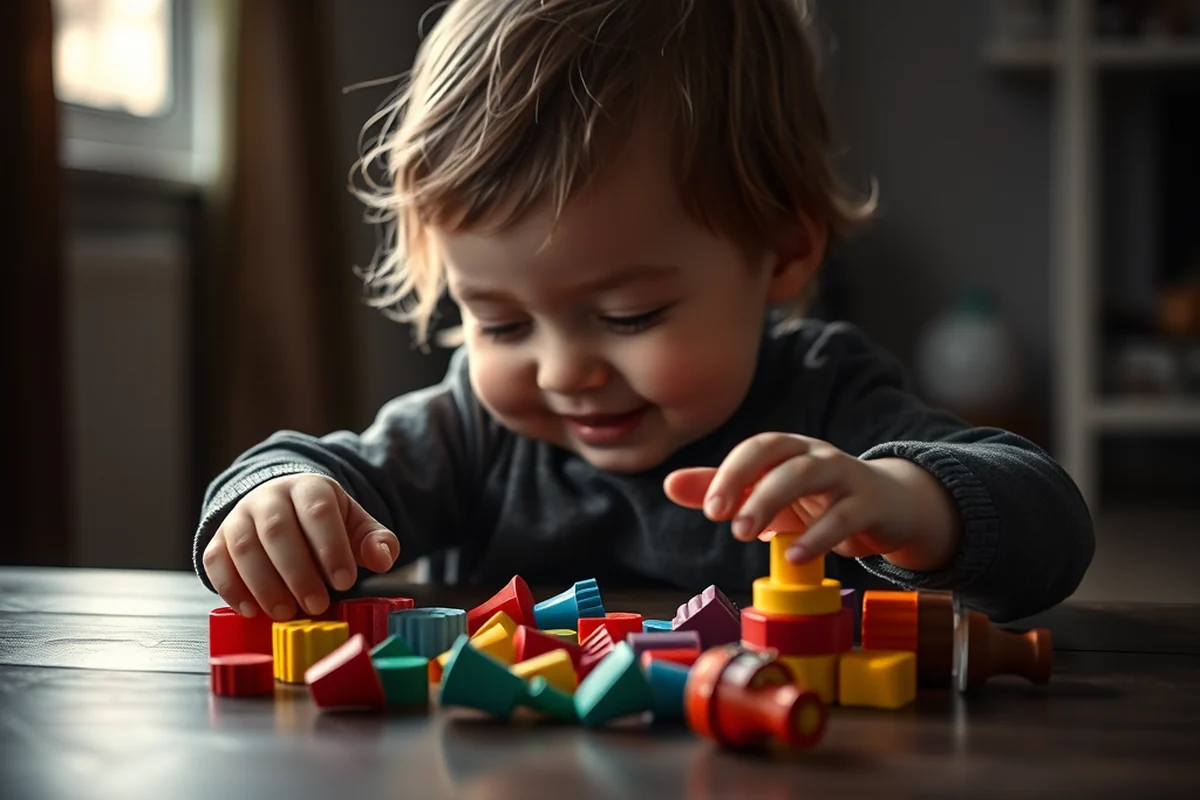
One of the most surprising things I learned is that children often compare themselves to others not just in terms of outcomes, but in how they feel during and after a conflict. For instance, my son once told me that he felt bad when he had a fight with his friend because his brother had a fight with a friend and he felt happy afterward. I asked him why he felt bad. He said, 'Because I didn’t feel like my brother did after his fight.' This simple observation showed me that he was comparing not just the conflict itself but the emotional aftermath as well.
This kind of self-reflection is crucial. It helps children understand that emotions are not always about the situation itself but also about how they interpret it in relation to others. When they compare their own emotional responses to those of their peers, they begin to see that there are multiple ways to feel about the same situation. This realization can be empowering because it opens the door to more flexible thinking and emotional regulation.
To support this, I started asking my children open-ended questions like, 'How did you feel after that situation compared to how you thought you would feel?' or 'Did you notice how your friend felt when you did that?' These questions helped them explore their emotions and see how their actions could influence others. It wasn’t long before they began to ask each other similar questions during their own conflicts, which was a sign that they were using comparison as a tool for emotional intelligence.
Children don’t always know how to feel — but they know how others feel, and that’s a starting point.
Related: Best children learn conflict resolution skills from
Related: Children learn conflict resolution skills from vs
Related: Children Learn Conflict Resolution Skills From Not Working
Using Comparison as a Tool for Empathy
Empathy is one of the most important skills for resolving conflicts, and it’s something that children can develop through comparison. For example, I once watched my daughter try to resolve a conflict with her younger brother by recalling how her friend had handled a similar situation with her own sibling. She didn’t just copy his actions — she tried to understand his feelings and how he had made things better. This kind of reflective empathy is something that comes from comparing experiences and seeing the impact of different approaches.
When I asked her about it later, she said she felt like she was 'trying to be like her friend because that worked better.' This was a powerful moment because it showed that she was using comparison not just to learn how to resolve conflicts. Also to understand the people involved. She wasn’t just thinking about the outcome — she was thinking about the person who had made that outcome possible. This kind of thinking is a natural step toward developing empathy and social awareness.
To encourage this, I started using stories and role-play to help my children explore different perspectives. I would ask them, 'What if you were the other person in this situation? What would you think or feel?' These questions helped them see that conflicts are not always black and white. That understanding the other person’s point of view can be a key to resolution.
When your child is in a conflict, ask them to imagine they are the other person. This encourages them to think about the situation from a different angle and can help them find solutions through comparison and empathy.
“I remember the day my son, then three years old, grabbed a toy from his brother and refused to give it back.”— Toddler Conflict Resolution Strategies editors
Related: Top children conflict resolution skills
The Role of Siblings in Conflict Resolution
Siblings are one of the most powerful sources of comparison for children, and I’ve seen firsthand how they can shape conflict resolution skills. When my older son had a conflict with his younger brother, I noticed that my older son would often look to his older brother for guidance. He would say things like, 'What did you do when you had a fight with your brother?' or 'Did it work out in the end?' This kind of questioning showed that he was using his older brother as a model to navigate his own situation.
Over time, I saw my older son begin to adopt some of his brother’s strategies, like taking a break before talking things out or using a calm voice to express his feelings. It wasn’t a direct copy — it was an adaptation, and that’s what made it effective. He wasn’t just learning how to resolve conflicts; he was learning how to do it in a way that felt right for him.
This kind of modeling is powerful because it shows children that there are multiple ways to handle a conflict, and that some approaches are more effective than others. It also teaches them that conflict resolution is a skill that can be learned and improved over time, which is a lesson that will stay with them into adulthood.
Related: Affordable children learn conflict resolution skills from
The Impact of Media on Conflict Resolution
Media, whether it's TV shows, movies, or even online videos, is a powerful source of comparison for children. I’ve seen my children mimic the way characters in their favorite shows handle conflicts, sometimes with surprising accuracy. For example, they once resolved a disagreement with a friend by saying, 'We can share the toy if we take turns,' which was something they had seen in a cartoon they loved. This kind of modeling shows that media can be a useful tool for teaching conflict resolution skills.
However, I’ve also noticed that some media can distort the way children handle conflicts. In one instance, my daughter watched a show where a character resolved a conflict by being aggressive, and she tried to mimic that behavior in her own life. It was a wake-up call for me — I realized that not all media teaches positive conflict resolution skills, and that some can even reinforce negative behaviors.
To help navigate this, I started discussing the ways that characters in media handle conflicts with my children. I would ask them, 'Was that the best way to handle the situation?' or 'What would you have done instead?' This helped them think critically about the behavior they were seeing and made them more aware of the impact of their choices.
Related: Top children learn conflict resolution skills from
The Role of Adults in Guiding Comparison
While children naturally compare themselves to others, adults can guide these comparisons in a way that helps children develop positive conflict resolution skills. I’ve found that when I’m intentional about the kinds of comparisons my children make, they tend to model more constructive behavior. For example, if my children are having a conflict, I’ll ask them to think about how a friend or family member resolved a similar situation. This helps them see that there are multiple ways to handle a conflict and that some approaches are more effective than others.
I also make it a point to highlight the positive outcomes of resolving conflicts in a healthy way. When my children see that their peers are able to resolve conflicts without yelling or hitting, they’re more likely to try those methods themselves. I’ve noticed that when they hear stories about how others have resolved conflicts successfully, they become more interested in trying similar approaches in their own lives.
This kind of guidance is essential because it helps children see that conflict resolution is not just about the outcome — it’s also about the process and the relationships involved. By framing comparisons in a positive light, I’ve been able to help my children develop a more thoughtful and empathetic approach to conflict resolution.
Children are not just passive observers — they are active learners who shape their behavior through the comparisons they make.
The Long-Term Benefits of Comparison-Based Learning
Over the years, I’ve seen how the skills my children developed through comparison have stayed with them. They’re not just better at resolving conflicts — they’re better at understanding others, communicating their needs, and working through disagreements in a constructive way. These are skills that will serve them well in school, in relationships, and in the workplace as they grow older.
One of the most surprising benefits I’ve noticed is how confident my children have become in their own abilities. They now see conflict resolution as a skill they can improve over time, rather than something they’re either naturally good at or not. This kind of mindset is crucial because it helps them approach problems with a growth-oriented perspective, which is something that can be applied to many areas of life.
I’ve also noticed that they’re more willing to take responsibility for their actions when they see how others have handled similar situations. This is a powerful lesson because it helps them take ownership of their behavior and think about how they can make things better, even when they’re in the middle of a conflict.
🌿 Gentle Guidance
This approach focuses on subtle modeling and gentle encouragement, allowing children to explore conflict resolution naturally through observation and reflection.
⚡ Fast-Track Learning
Ideal for parents who want to accelerate their child’s conflict resolution skills through direct comparison with positive role models and clear, structured guidance.
🧳 Travel/ Away-From-Home
Tailored for parents who are frequently away from home, this approach emphasizes teaching children to resolve conflicts independently through comparison with familiar people or situations.
👶 Multiples
Designed for parents of multiple children, this variation helps siblings compare and learn from each other, fostering a natural environment for conflict resolution skills to develop.
🔄 Regression Reset
For children who are going through a developmental regression, this approach helps them re-engage with conflict resolution through familiar comparisons and structured reflection.
| The mistake | Why it happens | The fix |
|---|---|---|
| Forcing comparisons on your child | Children need to learn through their own observations and reflections. Forcing them to compare themselves to others can create pressure and resistance. | Instead, ask open-ended questions and let them explore comparisons naturally, without judgment or pressure. |
| Ignoring the negative comparisons your child makes | Negative comparisons can lead to unhealthy behaviors and a lack of confidence. Ignoring them can prevent your child from learning more constructive ways to resolve conflicts. | Address negative comparisons by helping your child see the value in learning from positive role models and focusing on growth-oriented thinking. |
| Overemphasizing outcomes over the process | Focusing only on the outcome of a conflict can make your child feel that resolution is about winning or losing, rather than about understanding and growing. | Encourage your child to reflect on how they felt during the conflict and what they learned from the experience, rather than just the outcome. |
| Not modeling positive conflict resolution behavior yourself | Children learn by observing adults. If you don’t model healthy ways to resolve conflicts, your child is less likely to adopt them. | Be intentional about how you handle conflicts with others, and model the behavior you want your child to adopt. |
Children Learn Conflict Resolution Skills From Comparison
Common Questions
How can I encourage my child to use comparison for conflict resolution?
What if my child is comparing themselves negatively?
Can media really influence how my child handles conflict?
How can I help my child take responsibility for their actions?
References
Cite this guide
Toddler Conflict Resolution Strategies (2026). Children Learn Conflict Resolution Skills From Comparison. https://toddlewise.com/children-learn-conflict-resolution-skills-from-comparison/
Feel free to cite or share this guide.